Product Overview
Released in 1966, the Lamy 2000 hasn't been redesigned since — a rare thing in a category that chases trends every season. It's the pen that defined what a Bauhaus-influenced writing instrument could look like: no branding on the barrel, no ornament, just form doing exactly what it needs to do.
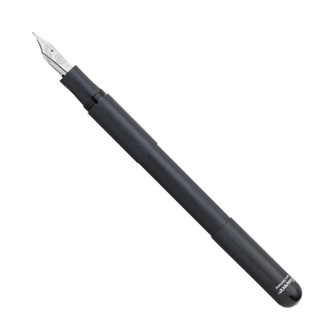
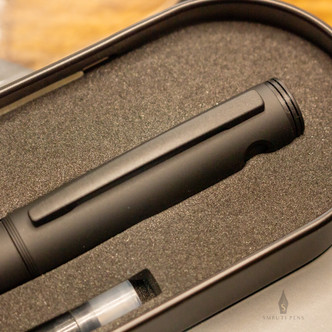
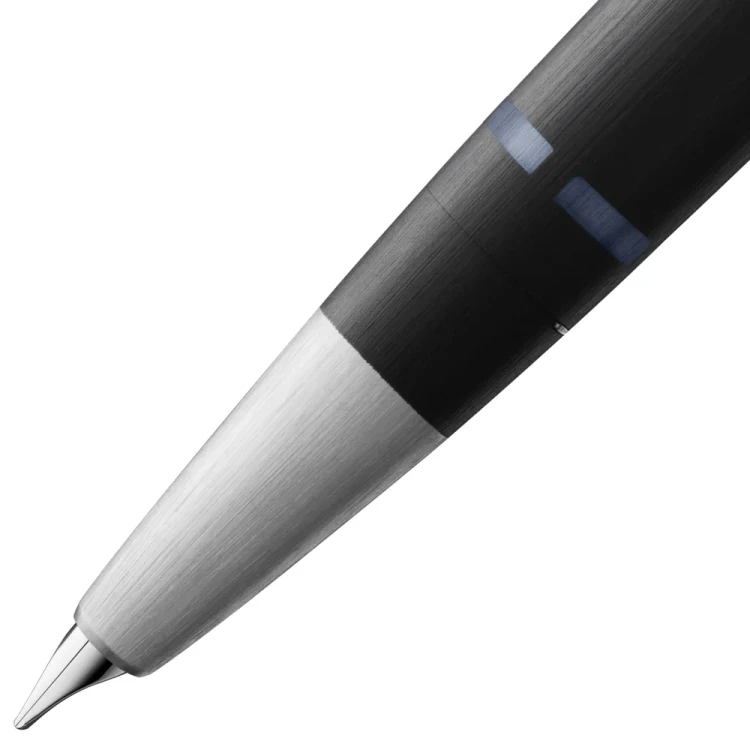
The body is Makrolon fiberglass, warm and slightly textured in the hand, paired with brushed stainless steel fittings that won't show fingerprints or scratch easily. The clip is spring-loaded and mounted externally, so it opens with real tension instead of flexing weakly against a pocket. Weight is balanced through the barrel rather than the cap, which is why people who write for long stretches tend to reach for this pen specifically.
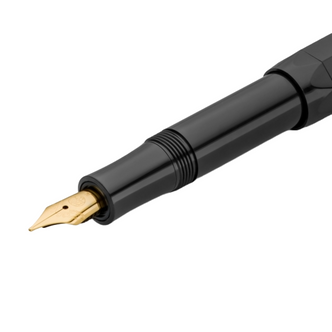
It fills via piston mechanism — twist the blind cap, draw ink straight from the bottle, no cartridges or converters to think about. The nib is 14k gold with a platinum coating, giving it a cooler, steel-like look that matches the fittings rather than standing out against them.
Specs:
- Fountain pen, piston-fill system
- Body: Makrolon fiberglass
- Fittings: stainless steel, matte brushed finish
- Nib: 14k gold, platinum-coated
Nib Size Guide: Fine vs. Medium
Fine (F) lays down a thinner line — ideal if you write small, take a lot of notes, or prefer precision over flow. It's also the better choice on thinner paper, since less ink means less risk of feathering or bleed-through.
Medium (M) puts down a noticeably bolder line with a bit more ink flow, giving your writing a smoother, more relaxed feel. It's a popular pick for journaling, letter writing, or anyone who likes a bit of visible line variation.
Both nibs are 14k gold with a platinum coating, so the writing experience is springy and smooth either way — the difference is really just line width and how much ink hits the page. If you're not sure which to choose, Medium is the more forgiving option for beginners, while Fine gives you more control for detailed writing.
Reviews